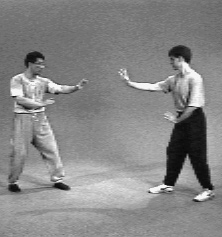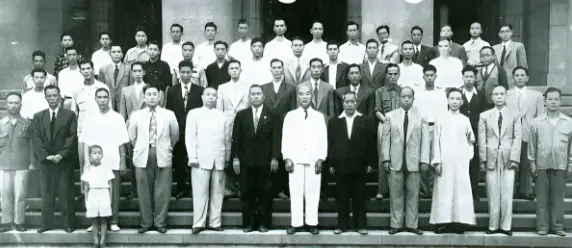
Yizong · The Moral Dragon · Bath, UK
The Yizong lineage
Dong Haichuan - Cheng Tinghua - Gao Yisheng - Zhang Junfeng - The Hong Brothers (Hong Yixiang, Hong Yimian, Hong Yiwen) - Luo Dexiu - Ollie Smith
The name Yizong
Yizong (易宗) was not a personal name or generational title given to Zhang JunFeng (張俊峰, 1902–1974). It was a lineage name created and bestowed by his teacher, Gao Yisheng (高義盛), the founder of Gao-style Baguazhang.
What “Yizong” means
Yi (易) refers to the I Ching (Yi Jing, the Book of Changes) — the philosophical backbone of Baguazhang. It signifies constant change, adaptability, and transformation.
Zong (宗) means ancestral school, lineage, or core principles.
When Gao Yisheng formalised his evolution of Baguazhang — explicitly dividing it into pre-heaven (circular walking) and post-heaven (sixty-four linear fighting palms) — he created and designated Yizong (易宗) as the official name for his branch. In essence, it means the lineage of the Book of Changes. He bestowed this lineage name on his student Zhang JunFeng, giving him the designation 臺始易宗.
Yizong comes to Taiwan
Zhang JunFeng is the man who carried Gao's Yizong system to Taiwan and made it famous there. When he fled the Communist Revolution and arrived on the island in 1948, he brought Gao's teaching with him. In 1950 he established the Yizong Martial Arts School (易宗國術總館) in Taipei.
Zhang was a master of three distinct arts — Gao-style Baguazhang, Hebei Xingyiquan, and Hao-style Taijiquan — and used the name Yizong not only to honour his teacher's Bagua lineage, but as an umbrella for his entire integrated internal curriculum.
From his first group of disciples — foremost among them the three Hong brothers: Hong Yiwen, Hong Yixiang, and Hong Yimian — Yizong Baguazhang has become one of the world's most prolific and successful lineages of Bagua.
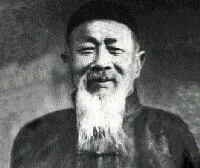
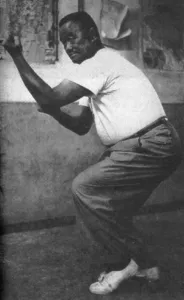
Taiwan: Zhang JunFeng and the Hong brothers
After settling permanently in Taiwan in 1948, Zhang practised on Round Mountain in northern Taipei while trying to make a living. His power and unusual circling practice drew crowds and challengers. Among his first core group of around ten students on Round Mountain were the three Hong brothers: Hong Yiwen, Hong Yixiang, and Hong Yimian. All ten eventually became disciples.
Their father had a very successful business with a monopoly on candles, incense, and fireworks, but he was worried about being able to defend his family's business interests. Towards this effort, he had procured martial arts teachers of all sorts for his sons. In the late 1940s they began to study with Zhang JunFeng and became very capable and successful fighters.
They eventually all taught their own martial arts classes around Taipei, Taiwan.
Luo Dexiu
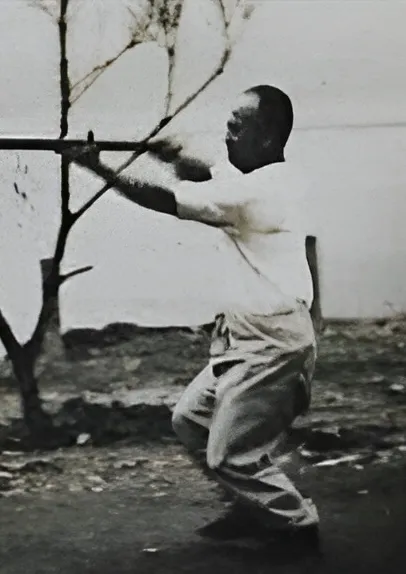
Luo Dexiu (羅德修) began studying internal martial arts under Hong Yixiang. In his early years, he focused on learning to fight, primarily using Xingyiquan, with the main goal of winning competitions and challenge matches.
He became one of Hong's best fighters. As he delved deeper into Yizong martial arts, he developed a keen interest in Baguazhang. He discovered that the essence of Zhang JunFeng's martial arts lay in Zhang's training in Baguazhang under Gao Yisheng.
Luo Dexiu studied Gao-style Baguazhang with his primary teacher, Hong Yixiang, and with many of Zhang's students, including Zhang's first disciples, Hong Yiwen and Hong Yimian.
Later, he intensively studied Bagua with Liu Qian, an early student of Sun Xikun, expanding his knowledge of Bagua as a whole and its principles and teaching methods in particular.
Today, Luo Dexiu continues the Yizong tradition by teaching Gao-style Baguazhang, Hebei Xingyiquan, and Chen Panling Taijiquan through his classes in Taipei, Taiwan, and his yearly seminars worldwide. Luo Dexiu's school is called Yizong Bagua Men Qian Kun She (易宗八卦門乾坤社).
Ollie Smith
Ollie Smith first met Luo Dexiu in the summer of 2000 when he came to the UK and held an internal kung fu seminar on Xingyi, Bagua, and Taiji.
The experience of training with Master Luo was mind-blowing and two weeks later, Ollie moved to Taiwan to train with him five days a week, for eight years straight.
By 2006, Ollie was regularly teaching for his teacher in Luo's classes held in CKS Memorial Park in Taipei. This continued right up until 2008, when Ollie left the class and moved to Japan, teaching outside the Heian Shrine in Kyoto for more than two years. He earned his school name 龍德館 (Long De Guan) and perhaps the first-ever certification from Master Luo himself.
Moving again in 2010, Ollie returned to Taiwan to find Luo at class in CKS Park again to continue where he left off. The syllabus mostly covered — little did Ollie know at the time that one Xingyi form Luo taught to no one would take going back and following Luo for another ten years — he arrived in Bath and quickly set up a class teaching Baguazhang.
Ollie has been teaching ever since, and regularly catches up with Master Luo in seminars, trips back to Taiwan, and the odd phone call.
History
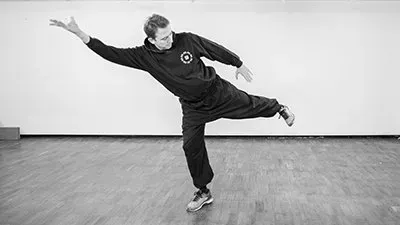
The Yizong branch of Baguazhang traces an unbroken teaching line from mainland China to Taiwan and on to students worldwide. Dong Haichuan (董海川) is regarded as the father of Baguazhang — the art from which everything in this lineage ultimately descends.
The name Yizong itself belongs to Gao Yisheng's formalisation of the Cheng Tinghua branch: pre-heaven circle walking and creation of 64 post-heaven linear palms under one integrated system. What makes Yizong distinctive in practice is also its openness to related northern arts — Xingyiquan and Taijiquan taught alongside Bagua, particularly after Zhang JunFeng's synthesis in Taiwan.
Cheng Tinghua was friends with Li Cunyi and Zhang Zhaodong, renowned masters of Xingyiquan, who learned Baguazhang from Cheng Tinghua and Dong Haichuan. Gao Yisheng and Zhang JunFeng both studied Xingyiquan from Li Cunyi. Wu Mengxia followed a similar path in stages: he first trained Baguazhang under Han Muxia (a student of Zhang Zhaodong), then spent years as a training and sparring partner of Zhang JunFeng in Tianjin — the two introduced each other to teachers and cross-trained together as friends and rivals. Only later did Wu meet Gao Yisheng, lose to him in challenge, and kneel to become Gao's disciple.
This intermixing of martial arts has led to the co-teaching of Bagua and Xingyi in our school, and to a broader understanding of the internal arts as a whole. Throughout the years, there has been a tradition of exchanging perspectives, sharing training methods, and passing on combat experience.
The Baguazhang lineage
Long before the name Yizong existed, the art itself was forged. Dong Haichuan (董海川) is considered the father of Baguazhang. Born in the early 1800s, he trained widely in local martial arts before developing the circling palm method that would define the art. During his lifetime it was known as zhuan zhang — turning palm — and drew on Daoist circle-walking practice as well as his fighting experience. He famously worked as a waiter in Beijing before his skill was recognised by Prince Su and he began teaching openly.
Dong Haichuan taught Cheng Tinghua (程廷華), a renowned wrestler and eyeglass seller sometimes called "Eyeglasses Cheng." Cheng's Bagua integrated wrestling, striking, and the fluid "swimming dragon" body method that became characteristic of the Cheng branch. Cheng later taught in Dong's school and was deeply respected for both his fighting skill and his teaching.
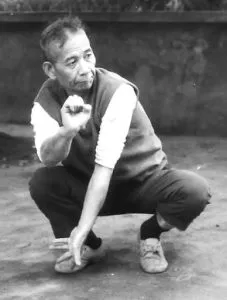
Cheng Tinghua
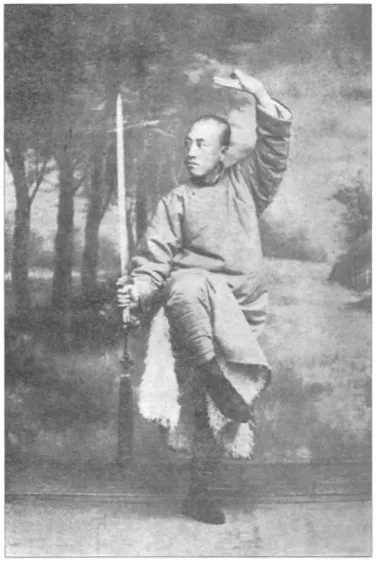
Legend has it that Cheng practised stancework and leg strength by sitting without a chair — crossing one leg over the other as if seated while working in his shop. He could subdue opponents without unnecessary harm, and his understanding of Baguazhang influenced a generation of practitioners across northern China.
Zhou Yuxiang and Gao Yisheng
Zhou Yuxiang was a student of Cheng Tinghua, famed for his zhuangzhang (crashing palm) and called "peerless palm" Zhou. When Gao Yisheng first met Zhou, they fought three times; each time Gao was dropped by Zhou's crashing palm. Gao became Zhou's student, and Zhou eventually introduced him to Cheng Tinghua for formal discipleship.
It was Gao Yisheng who would later systematise pre-heaven and post-heaven training and name his branch Yizong — the lineage that Zhang JunFeng carried to Taiwan.
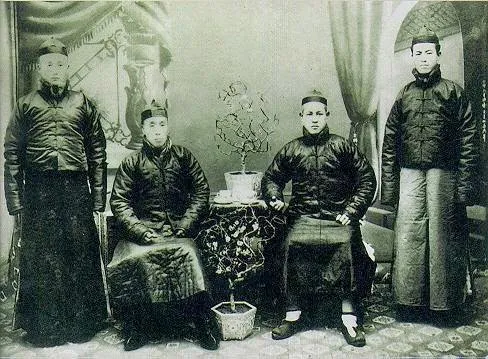
Bagua and Xingyi together
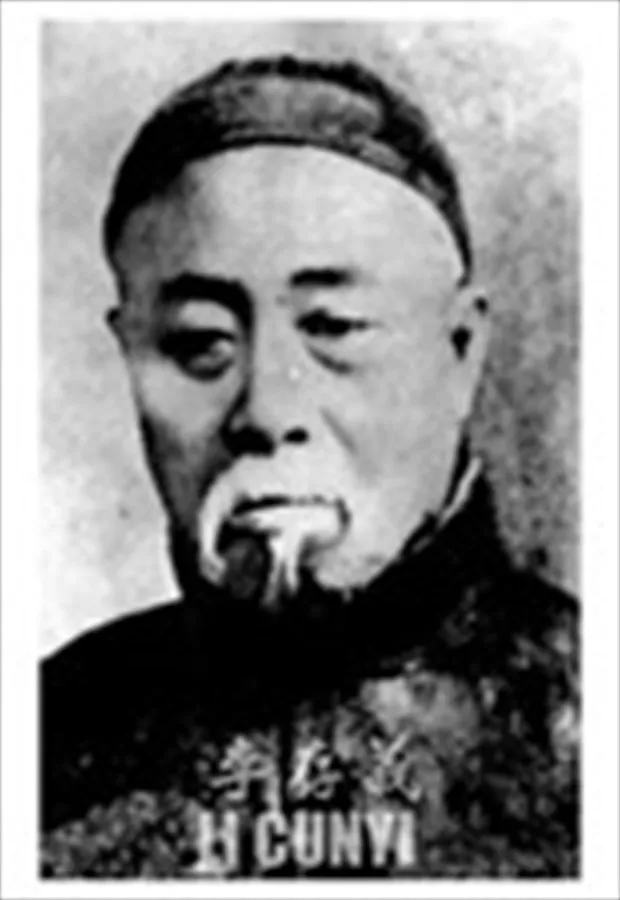
Li Cunyi
Our style of Xingyiquan originates from Li Cunyi. There is talk that Zhang JunFeng was mostly taught by Li Cunyi's son at Li Cunyi's school. Zhang JunFeng and Gao Yisheng both learned Li Cunyi's Xingyiquan. Li Cunyi was friends with Cheng Tinghua and, even though he was considered a student of Dong Haichuan, he likely learned most of his Baguazhang from Cheng Tinghua.
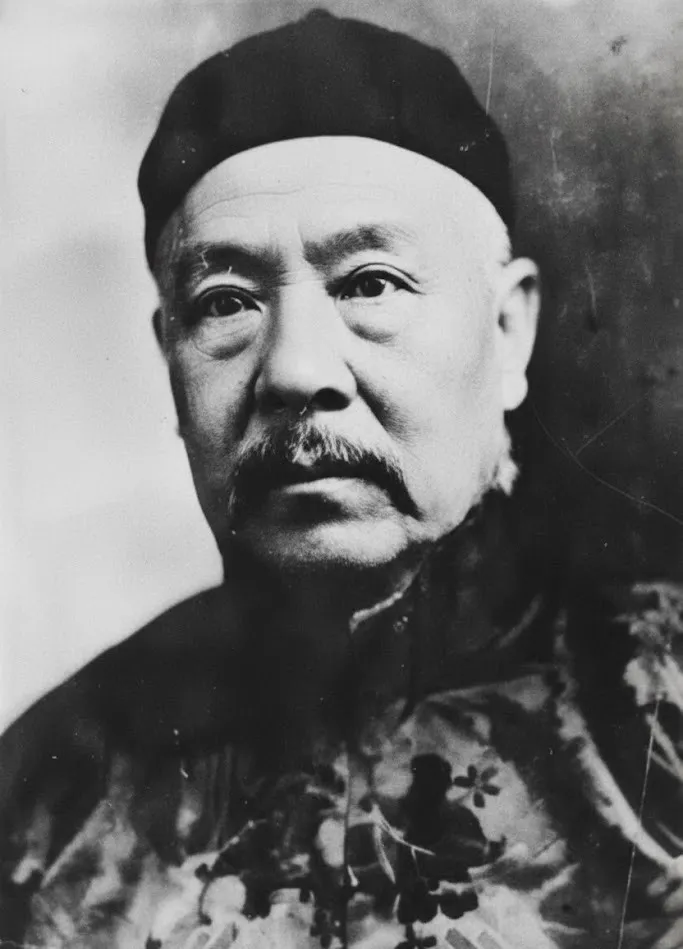
Zhang Zhaodong
Zhang Zhaodong was a well-known martial arts master who was a close friend and business partner of Li Cunyi. He taught at the same school and bodyguard company as Li Cunyi, called The Warriors Association. One of his famous students was Han Muxia, who gained fame by defeating a Western boxer and strongman. Another of his students, Jiang Rongqiao, became well-known for writing a book on Baguazhang.
Luo Dexiu practices and teaches Bagua, Xingyi, and Chen Panling Taijiquan together. His teacher (Hong Yixiang) practised all three; his teacher (Zhang JunFeng) practised all three; his teachers (Gao Yisheng and Li Cunyi) practised Bagua and Xingyi; and their teacher, Cheng Tinghua, trained in Bagua and, at the very least, had many friends and students who trained in Xingyi. Ollie's kung fu teaching continues this tradition and teaches Bagua and Xingyi alongside one another.
Taijiquan at The Moral Dragon
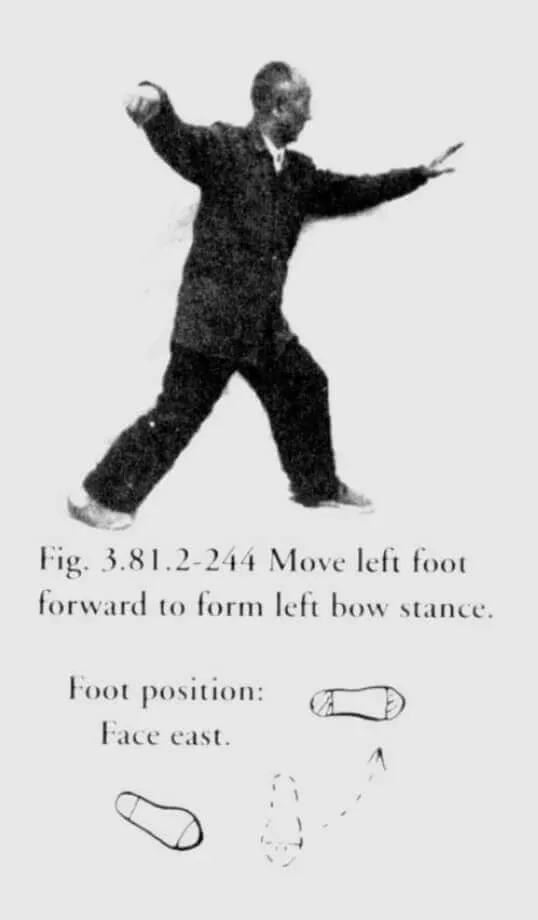
Alongside Gao-style Baguazhang and Hebei Xingyiquan, we study Chen Panling’s Taijiquan (陳泮嶺太極拳) — especially his Nanjing 99 form — as taught in the Yizong lineage of master Luo Dexiu.
Chen Panling’s form is not a Yizong invention; it is his synthesis of the major Taiji traditions of his day, preserved and taught within our school with full credit to him. Training includes form, standing practice, push hands, and martial application in the same practical spirit as Bagua and Xingyi.
Monday classes in Bath focus on Baguazhang; Taijiquan is not currently taught as a regular class, while Xingyiquan is available by booking.
Gao Yisheng
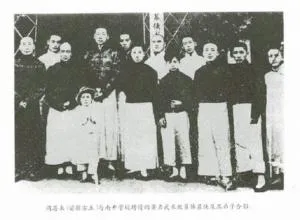
Gao Yisheng (高義盛, 1866–1951) holds a central place in our lineage as the founder of Gao-style Baguazhang and the creator of the Yizong (易宗) lineage name. Throughout more than forty years of teaching, his method evolved into a complete system — pre-heaven (Xian Tian) circle walking and creation of 64 post-heaven (Hou Tian) linear palms — that he formally designated as Yizong. He bestowed this lineage on Zhang JunFeng with the designation 臺始易宗.
He had numerous students across northern China. In Tianjin, his nephew Liu Fengcai, who excelled in the pre-heaven palms, followed him from Shandong and taught classes for him.
Today, branches of Gao's teaching are found in Tianjin, Hong Kong, and Taiwan. In Taipei, one line comes from Wu Jin-yuan and his son Wu Huai-shan, who studied with Gao early on. The Yizong line that we follow came through Zhang JunFeng — a private student of Gao in Tianjin and one of his most capable fighters — who transmitted Gao's system to Taiwan in 1948 and established the Yizong school there in 1950.
Han Muxia and Wu Mengxia
Han Muxia
Han Muxia was a highly accomplished student of Zhang Zhaodong. One of the most repeated stories of him was of his win over a foreign strongman and boxer. He would later leave Zhang's school and teach on his own. One of his main students was also a renowned fighter, Wu Mengxia.
Wu Mengxia
Wu Mengxia was a very dedicated martial artist who was known for his fighting skills. He was also a good friend of Zhang JunFeng; they were often training and sparring partners and they helped to introduce each other to various teachers. Wu Mengxia trained extensively with his original Bagua teacher Han Muxia before eventually meeting and being defeated by Gao Yisheng. He knelt to become Gao's student and was one of his most successful fighters and students. Wu, unfortunately, remained in China after the takeover by the communists and, due to his previous connections and renown, was made to suffer.
Zhang JunFeng
Zhang JunFeng had trained in a number of systems of martial arts while owning his own trading goods business in Tianjin. He was a successful businessman in China who trained for his own interest and well-being before coming to Taiwan and making martial arts his profession. Because of his wealth, he was able to get highly valued information and training that was above and beyond other students in the schools he trained at. He would often tell the Hong brothers how he had to pay for this information in gold.
He used his martial arts skills to protect himself and his investments, for to live in China as a businessman during this time was a dangerous way of life. He settled permanently in Taiwan on 1 June 1948. While working as a salesman he practised in his spare time on Round Mountain in northern Taipei — big, powerful, and unlike anything local martial artists had seen. He easily defeated those who tested him and people began to seek him out as a teacher.
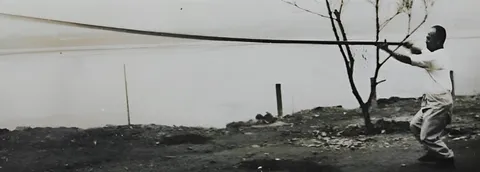
One story from his time very early on in Taiwan is that he had gone to the market to pick up vegetables. He was attacked by a triad gang composed of around thirty men with staves. He took one of their staffs away from them and beat the rest of them senseless with it alone. He was the only one standing at the end of this encounter — placed his vegetables on the staff and walked home.
Around 1950 he gave up business and began teaching martial arts full time. He founded the Yizong Martial Arts School (易宗國術總館) in Taipei and taught at Round Mountain and several other locations around the city, despite opposition from mainlanders who wanted to keep the arts private and from local teachers who resented an outsider teaching in public.
He had many challengers when he began to teach openly and was often at such a skill level above them that he could control opponents without seriously injuring them. He gained a reputation not just for his fighting skill, but his morality and compassion as well. He would even help friends by fighting in their place, such as his support for Wang Shujin in central and southern Taiwan — attending to the injured with bone setting and herbal medicine after Wang's challenge matches.
In the late 1950s, Chiang Kai-shek invited leading martial artists to demonstrate at the presidential residence. Zhang was asked to teach Tai Chi and chi kung privately, and went on to instruct staff at the Presidential Building, the Air Force headquarters, police and intelligence bureaux, and officers in the Department of Defense.
Among Zhang's personal practices was Lung Men chi kung, passed down through Yin Fu's lineage via one of Yin's students. He did not teach this widely — it was kept separate from his other arts and reserved mainly for disciples.
Zhang JunFeng taught in Taiwan for decades. His earliest students were trained with fighting as the primary goal. In 1966 or 1967 he became seriously ill after taking herbal medicine prescribed by an old friend; he never fully recovered. For the last seven years of his life his wife, Hsu Baomei, taught most of the classes while Zhang directed from a chair. He died in 1974; more than three thousand people attended his funeral.
The Hong brothers
Among the group of Zhang JunFeng's earliest students were the three Hong brothers. They were trained extensively how to fight with these arts with that as the goal, for their family was also home to a successful business and the father insisted that his sons be able to defend themselves, their family, and their business. In addition to tuition and gifts, the Hong family bought land and a house for Zhang, as well as a wife (whom they then had to fight her family for to take her away). All of this "tuition" led to their being trained particularly seriously and intensely by Zhang.
Hong Yiwen
Hong Yiwen was the older brother who also did well in school such that he trained to become a traditional Chinese medicine doctor. He had his own small class on the side where he taught students. Zhang encouraged his early disciples to specialise after they had worked through Hsing-I, Bagua, and Tai Chi — and Hong Yiwen became the family's Taijiquan specialist, a role that later connected naturally to Chen Panling's Taiji in the Hong school. The famous wrestler, Chang Dongsheng, would often send his wrestling students to Hong Yiwen if they showed interest in learning how to strike by having them learn Xingyiquan.
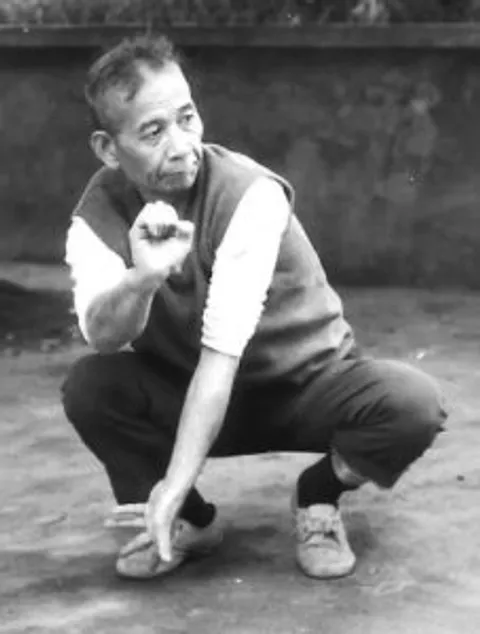
Hong Yimian
Hong Yimian was another brother who had been drafted into the Second World War to fight for the Japanese in the Philippines. He had real-world experience during the war and had no fear or hesitation in fights with others. Zhang encouraged him to specialise in Baguazhang. Due to his smaller size, he focused on the art's more nimble movements and jumping in and out of range more so than his other brothers.
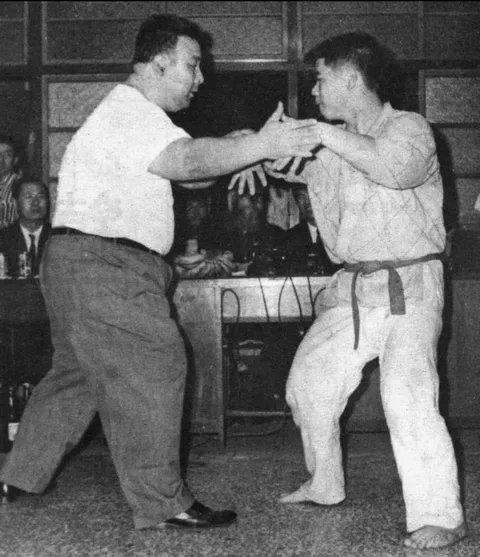
Hong Yixiang
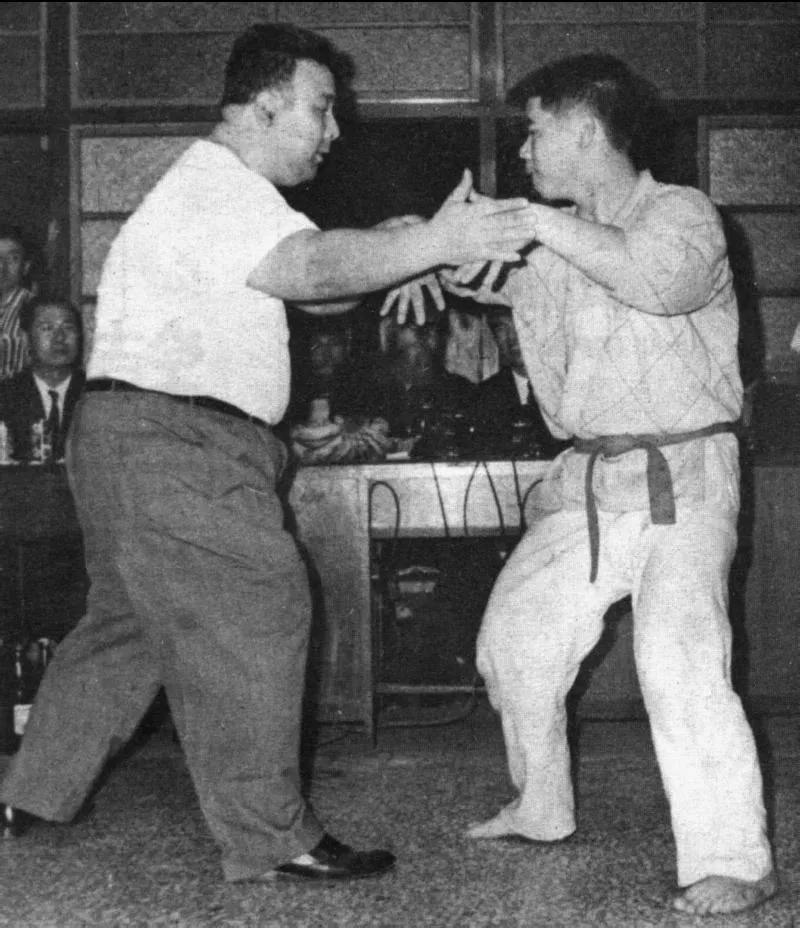
Hong Yixiang was the main teacher of Luo Dexiu. Luo is his disciple and called him shifu. Hong was the youngest of the three Hong brothers who specialised in martial arts and was also the largest and strongest. Zhang encouraged him to specialise in Xingyiquan. Many teachers had remarked upon him as a youth that he was very good "material" for martial arts, meaning that he had a great naturally strong body for learning the martial arts. He had a tremendously strong base and core and trained diligently in his youth. He was very skilled in sanshou (zhannian tuishou) and was surprisingly nimble and flexible.
He trained in the Japanese arts of judo and kendo on the island as a youth before starting with his family's southern kung fu, and his father would often invite teachers to the family's house to teach his children. Later, when Zhang JunFeng became the family's main teacher, he excelled in the more direct aspects of the arts of Xingyi and Bagua. He would go on to win many fights and challenges with his skills in Xingyi and Bagua. Zhang JunFeng would later on only teach his full sanshou curriculum to two students: Hong Yixiang and one other person (a labourer who carried large carts of goods for a living and was therefore tremendously strong as well). Hong Yixiang would go on to be probably the only person who would inherit Zhang JunFeng's full transmission of his fighting skills and knowledge.
One story about the Hong brothers as a group that I always remember Luo Laoshi talking about was their fear of Zhang JunFeng. Decades later, even after he was dead, they would talk of his training and his fighting prowess in hushed tones, in both fear and reverence that was, for them, reserved for no one else. Zhang would place Hong Yixiang in front of him and beat on him using sticky hands training until the bruises and pain gave way to nimble body reactions and skills in close-in attack and defense. Zhang would charge after Hong Yimian over great distances while jumping at him and using all manner of footwork to drill in the movement and footwork that Hong Yimian would need to form the basis of his fighting style. They were all beaten with sticks and long staffs while training their form movements if they were not up to the level of attainment that Zhang JunFeng wanted. Decades later they seemed to remember every bruise and every lesson.
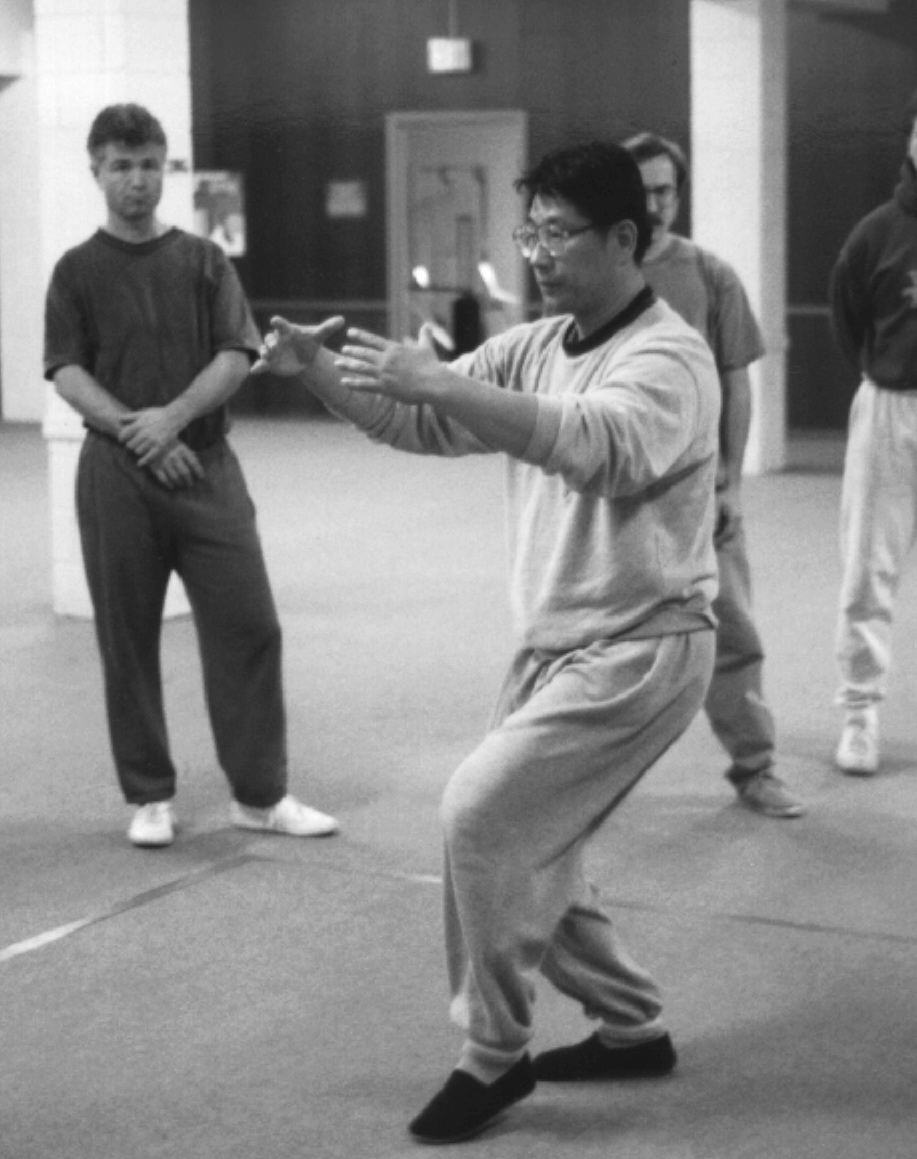
Luo Dexiu
Next is the formidable Luo Dexiu (羅德修). He was a senior student of the notorious Hong Yixiang and also studied with his brothers, Hong Yiwen and Hong Yimian. In his efforts to connect the rather disjointed Bagua system — Zhang had taught the three Hong brothers each a different part of his kung fu — Luo visited and learned from many other disciples of Zhang JunFeng.
Luo is a lineage disciple and champion fighter under Hong Yixiang. He is the main teacher in the Yizong Bagua branch teaching today other than Hong Yixiang's own line. Master Luo has significantly spread Yizong Bagua throughout North America, Europe, and Asia.
We often just refer to him as Laoshi — “teacher” in Mandarin. From decades of training, fighting, researching, and teaching, he is known as an expert in Gao-style Baguazhang, Hebei Xingyiquan, and Chen Panling's Taijiquan. Read the full Luo Dexiu profile →
Master Luo first began training in the late 1960s, while still in his early teens. His real start came when he followed a classmate to Hong Yixiang's school in 1971. From there he became Hong's youngest, most promising, and eventually one of his most successful students — Tang Shou Dao basics, Xingyiquan for competition, and a life-long pursuit of further skill.
He entered his first fighting competition in 1972 among the martial arts schools of Taipei and won first place. Months later he took second nationally, then first in successive tournaments — champion for three years running before mandatory military service.
His own school is now known as Qian Kun She. The full name of our family of internal martial arts is Yi Zong Ba Gua Men Qian Kun She.
Research, service, and teaching of Baguazhang
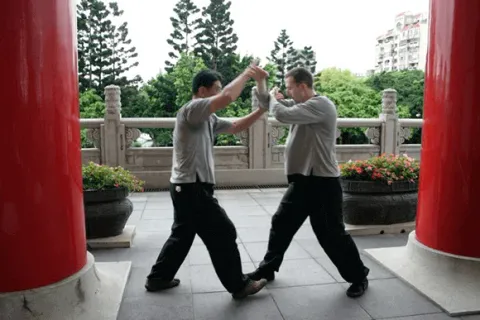
After his early competition years, Luo continued to train, helped teach newer students, entered further contests, and took challenges for his teacher. He and his classmates also began researching the arts Hong taught — learning that Hong's primary teacher was Zhang JunFeng — and Luo sought out other students of Zhang to deepen his understanding.
During Navy service in Kaohsiung he devoted free time to practice and challenge matches. One such incident was his defeat of the all-Army fighting champion with a single bengquan to the chest.
A further breakthrough came with Bagua teacher Liu Qian, an early senior student of Sun Xikun. Liu had a firm command of Bagua theory and training methods; Luo spent many hours asking questions and learning fighting methods, forms, weapons, neigong, and throwing.
Luo continued to research Yizong itself — comparing how different students of Zhang taught across different periods in Taiwan — and discovered that Zhang's primary fighting skills came from Gao-style Baguazhang.
At Zhang JunFeng's death, a recording of his will stated that anyone wishing to understand the essence of his arts should seek out the three Hong brothers. Luo did exactly that, even when it caused difficulties with Hong Yixiang. After decades with Hong Yixiang, Hong Yiwen, and Hong Yimian, he came to know the whole of Zhang's fighting arts.
In 1990 he began teaching Baguazhang separately, starting with Marcus Brinkman and soon a first group of disciples. He still teaches regular classes in Taipei at Chiang Kai-shek Memorial Park, and travels each summer to give seminars worldwide.
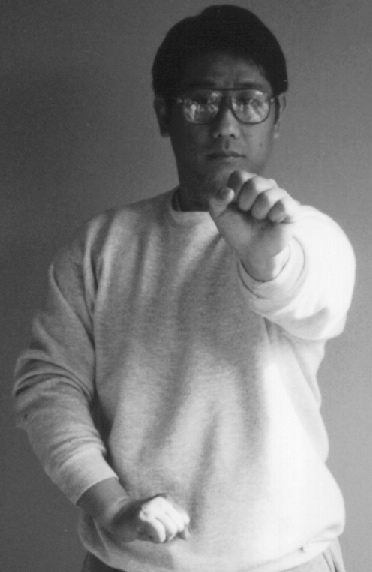
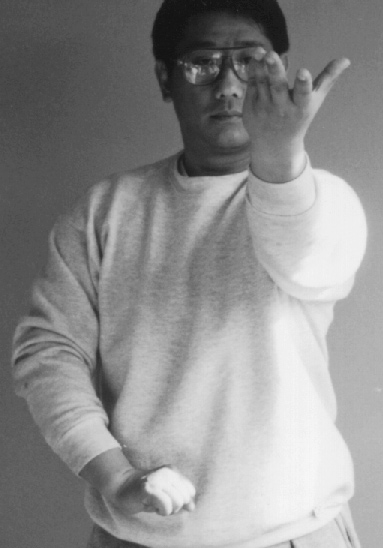
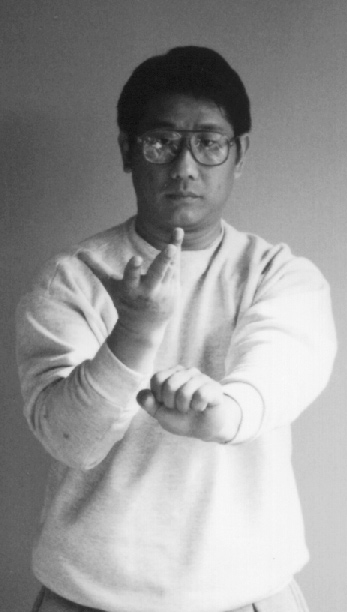
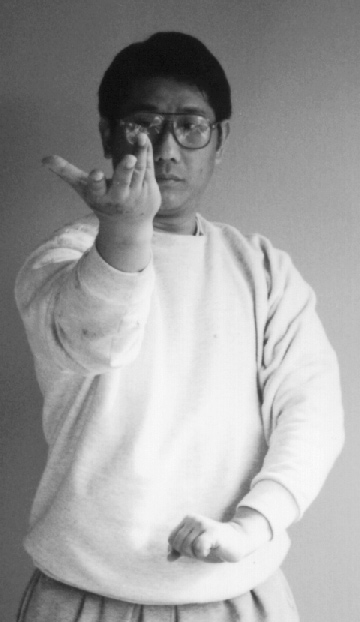
Basic hand methods
Clear hand shapes and issuing methods — entering, adhering, locking, and finishing. These are not ornamental; each posture connects to fighting application and to how we train at The Moral Dragon.
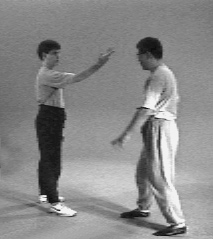
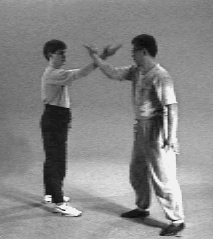
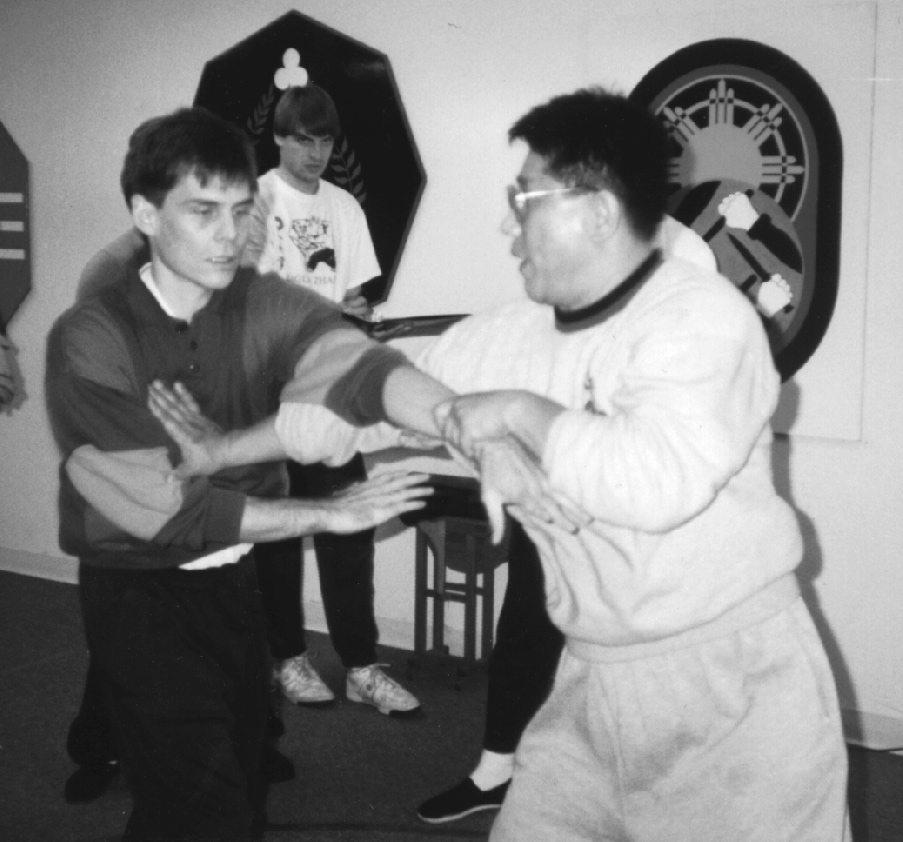
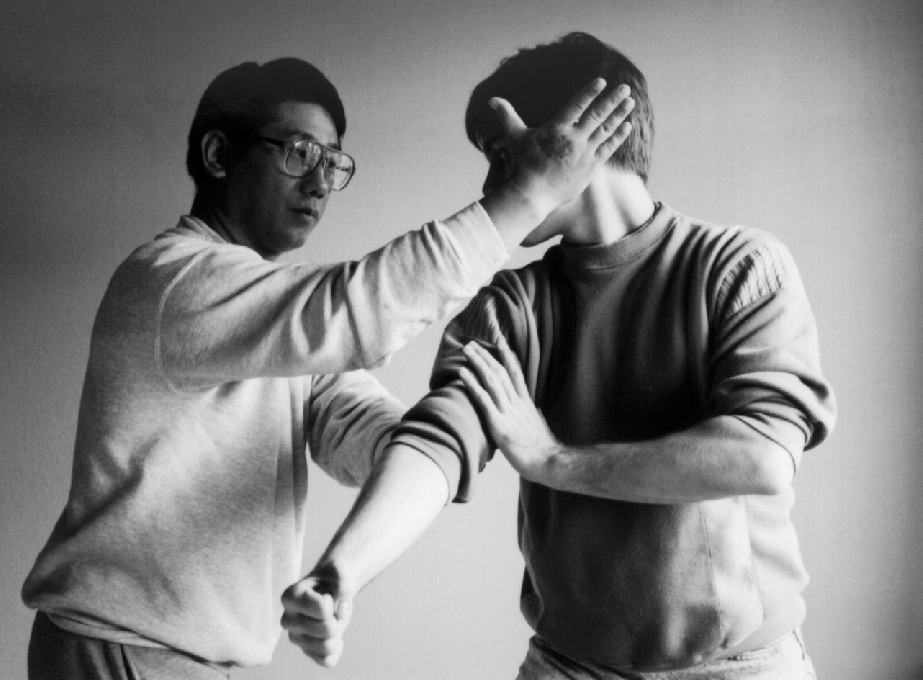
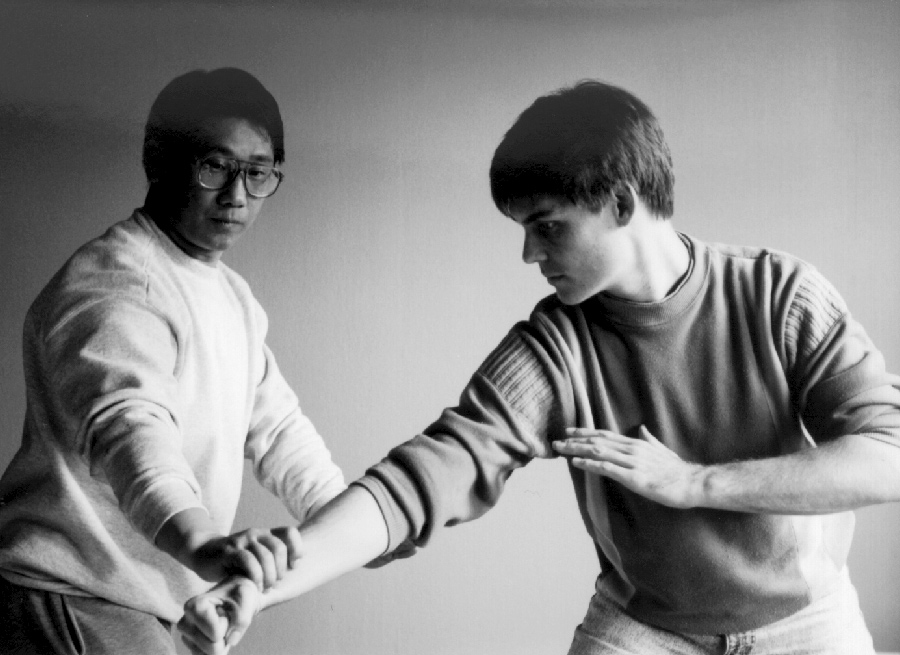
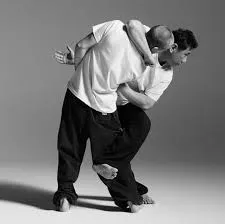
Fighting applications of Baguazhang
Partner work from the same journal series — sticking, controlling, and finishing against resistance. The practical spirit of Luo's teaching: traditional syllabus, hard physical practice, and martial effectiveness.