Yizong · The Moral Dragon · Bath, UK
Chen Panling Taijiquan
The Nanjing 99 form — silk-reeling, push hands, and martial application from the Yizong lineage of master Luo Dexiu of Taiwan.
What is Taijiquan?
Taijiquan (太極拳), often shortened to Taiji or Tai Chi in English, is one of the three great internal kung fu systems, alongside Xingyiquan and Baguazhang. It is practised for defence training, health, and longevity — and for the hard and soft martial method that sits at its heart.
A multitude of training forms exist, both traditional and modern. Some are especially known for relatively slow movement; others include fast work, weapons, and partner application. Today Taijiquan has spread worldwide. Most modern styles trace their development to at least one of the five traditional schools: Chen, Yang, Wu (Hao), Wu, and Sun.
At The Moral Dragon we practise and study Chen Panling Taijiquan (陳泮嶺太極拳) — especially the Nanjing 99 form — as passed down through the Yizong (易宗) school of Taiwan from master Luo Dexiu (羅德修). The art includes form, standing practice, push hands, and martial application in the same practical spirit as Bagua and Xingyi. Monday classes in Bath focus on Baguazhang; Taijiquan is not currently taught as a regular class.
Who was Chen Panling?
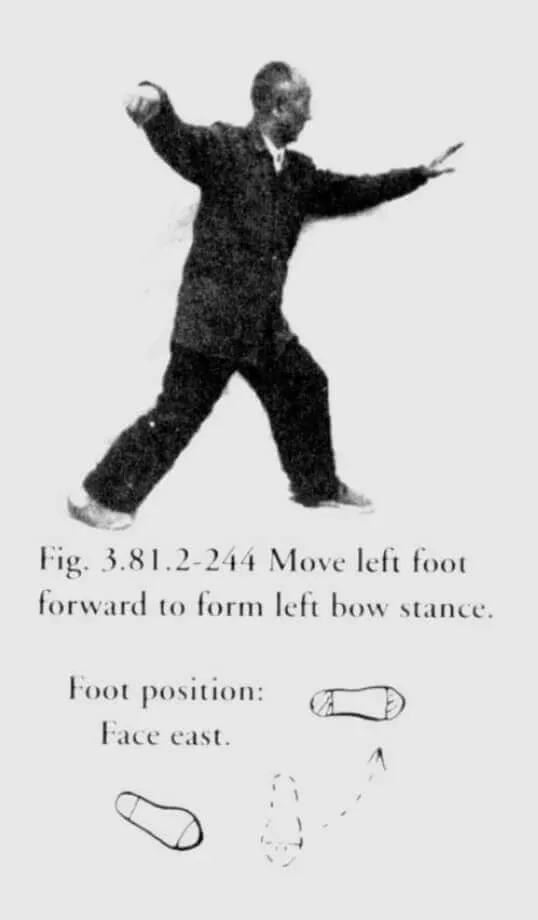
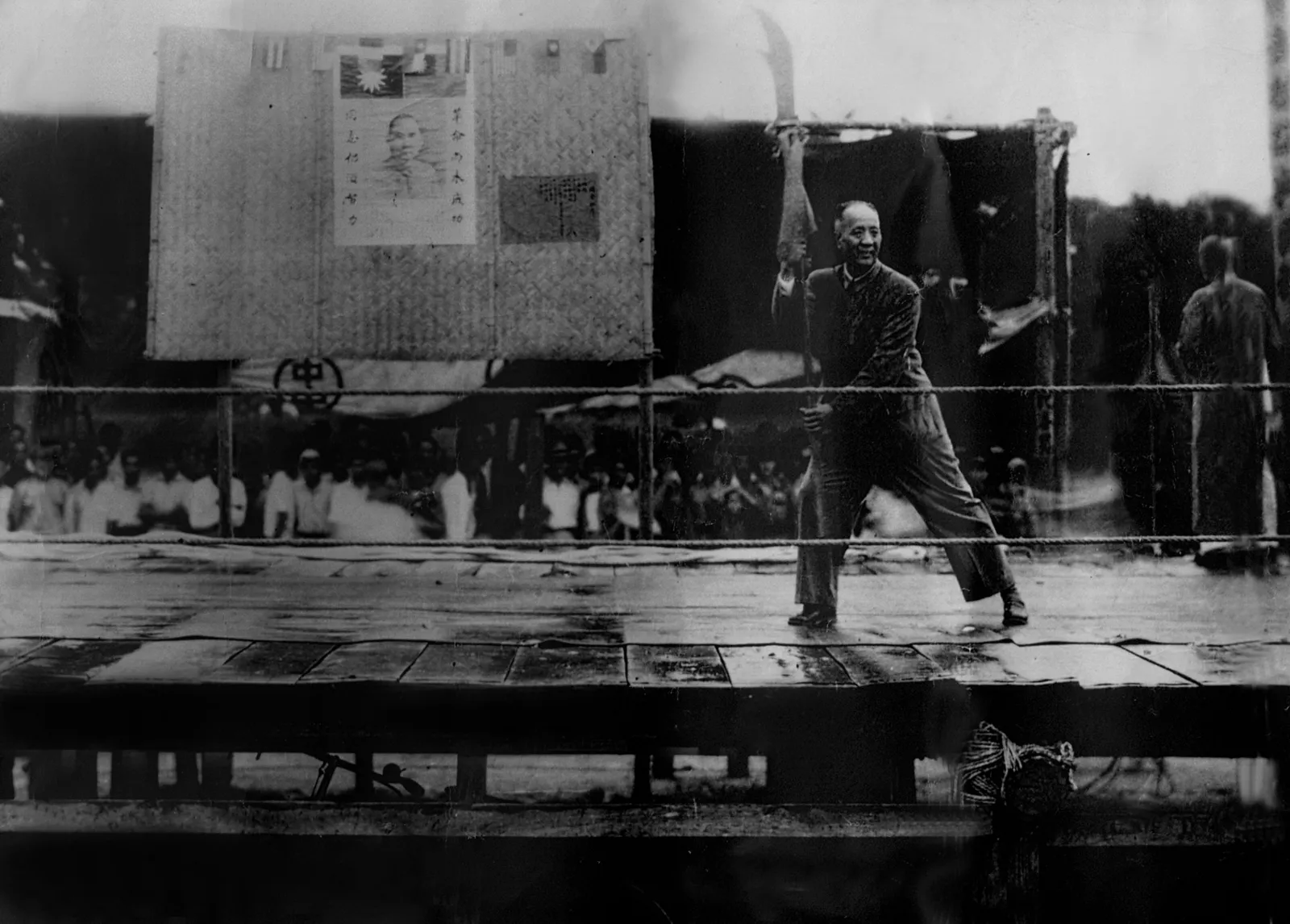
Chen Panling (陳泮嶺, 1892–1967) was a highly respected researcher, skilled practitioner, and one of the most important figures in twentieth-century Chinese martial arts. He headed the Chinese Boxing Association until his death at seventy-seven, and as chair of the Kuoshu Institute was charged with preserving China’s martial heritage.
“He was perhaps the most knowledgeable man in the world on the principles of Taijiquan.”
— Robert W. Smith
One of his major accomplishments was a style of Taiji that combined the chief elements of the three dominant traditions of his day into a single syllabus. It is still practised internationally — especially in Taiwan — as the 99 form or Nanjing 99 form of Taijiquan.
Though he became a well-connected statesman and skilled engineer, Chen’s first love was boxing. He became a revered martial artist in both Taiwan and mainland China, learning many external and internal systems and weapons, but later specialised in the three internal arts: Taiji, Xingyi, and Bagua. (Adapted from Tai Chi Chuan Chiao Tsai.)
The radical student
As a young student Chen was something of a nonconformist. He would not bow to the usual protocol of a kung fu school. His behaviour must have been challenging to seniors — yet it was tolerated because he was so dedicated that his teachers accepted him.
To refine his skills he studied at the famed Henan village of Chenjiagou (陳家溝), the modern birthplace of Chen-style Taijiquan.
As a teacher himself he did not insist on ceremony, but he was selective about whom he taught. He spoke openly and deeply on the intrinsic qualities of Taijiquan — what happens in the body during practice, and the interplay of breath and energy.
Chen Panling Taiji in the Yizong lineage
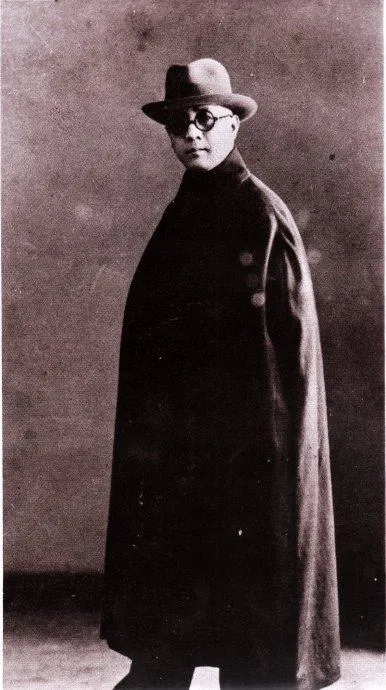
Chen Panling’s form became central to martial arts teaching in Taiwan and was transmitted through the Hong family. Zhang JunFeng taught Xingyi, Bagua, and Taiji as a complete internal programme; after his early students had worked through all three arts, he encouraged them to specialise — and Hong Yiwen became the Taijiquan specialist among the three brothers, later connecting naturally to Chen Panling’s synthesised Taiji in the Hong school’s Tang Shou Dao curriculum.
It is taught not only as a long, flowing form but with full partner work — pushing hands, application, and fighting method — in the same practical spirit as the Bagua and Xingyi in this lineage.
Luo Dexiu inherited and teaches this material extensively: form, neigong, and applied Taiji alongside his Baguazhang and Xingyiquan. It remains an integral part of Yizong training. At The Moral Dragon in Bath, Monday classes focus on Gao-style Baguazhang; Ollie is not actively teaching Taijiquan at present, while Xingyiquan is available by booking. Read the full Yizong lineage →
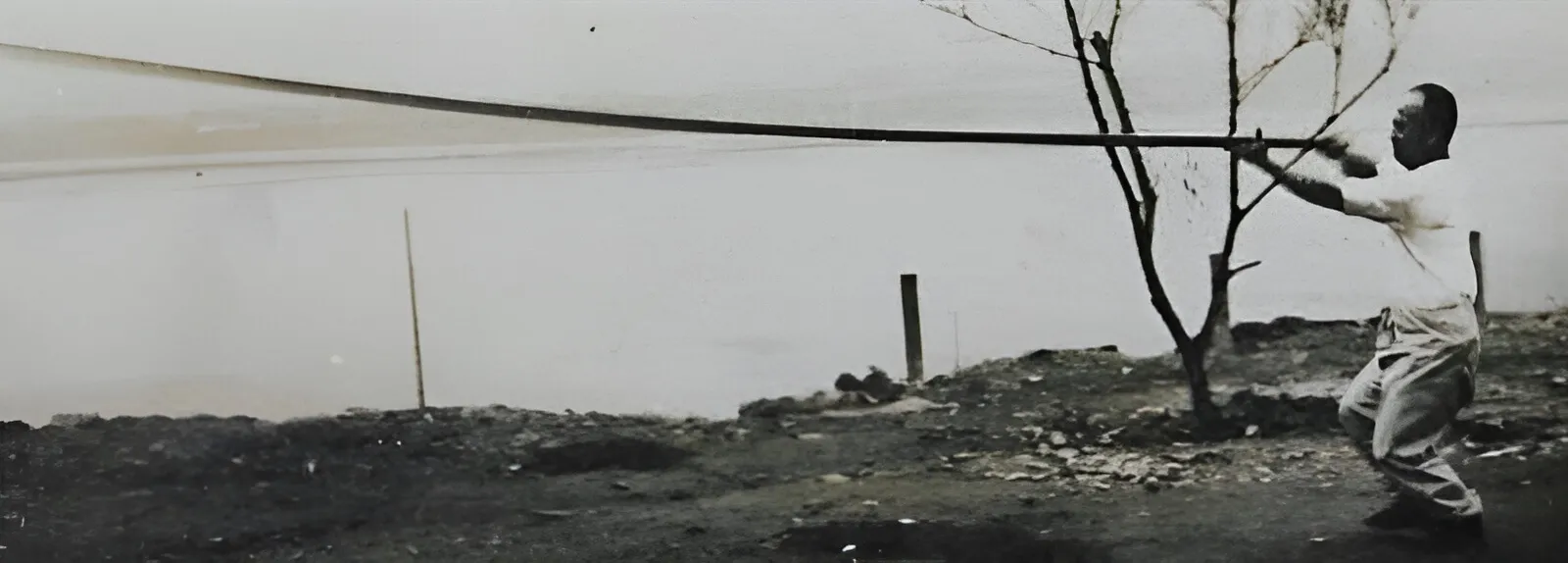
Nanjing 99 Taijiquan — teaching by Luo Dexiu
Taiji requires that you nourish your spirit and energy (shén qì, 神氣) internally, while externally using every joint in the body to create spiral silk-reeling movement. The result is elegant, natural beauty.
Nowadays people’s reasons for learning Taiji are quite different from when the art originated. Motivations are no longer purely martial — many practise for health, sport, or simply as a leisure activity.
The video here is a last-minute request by Ollie Smith at one seminar many years ago, to his teacher to demonstrate the Chen Panling version of the Nanjing 99 form. Master Luo Dexiu kindly goes through the first section without protest.
The origins of Taiji
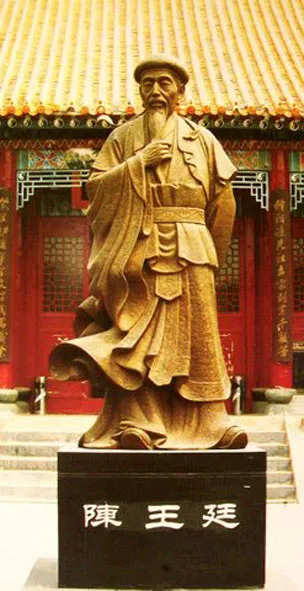
There are many stories regarding the origins of Taiji. They point to figures across the Tang dynasty (Shi Shuanping), Song and Ming dynasties (Zhang Sanfeng), and Qing dynasty (Chen Wangting and Wang Zongyue).
Many people agree that during the Ming dynasty Zhang Sanfeng and Wang Zongyue wrote classic discourses on Taiji; however, most practitioners believe that all Taiji ultimately derives from Chen-style Taijiquan.
Chenjiagou martial arts emerged with Chen Wangting towards the end of the Ming dynasty and into the Qing (c. 1600–1680) in Wen county, Henan province. Within the Chen family it was passed from father to son, but not to daughters, so it was difficult for outsiders to see the art and even harder to grasp its essence. This continued until Chen Changxing (1771–1853) taught Yang Luchan (1799–1872) of Hebei — and from that time Taiji began to spread.
Taiji draws on older military boxing (including material associated with General Qi Jiguang), Daoyin breathing exercises, and Chinese medical theory, with Bagua and five-element philosophy as its foundation.
What serious Taiji training includes
All good Taiji fighters traditionally studied:
- Theory
- Standing postures — 站樁 (zhàn zhuāng)
- Form exercise — large, middle, and small frame; fast and slow — plus stick, sabre, sword, and spear
- Push hands — single hand; vertical, horizontal, and diagonal
- Application and fighting method
Practice and application
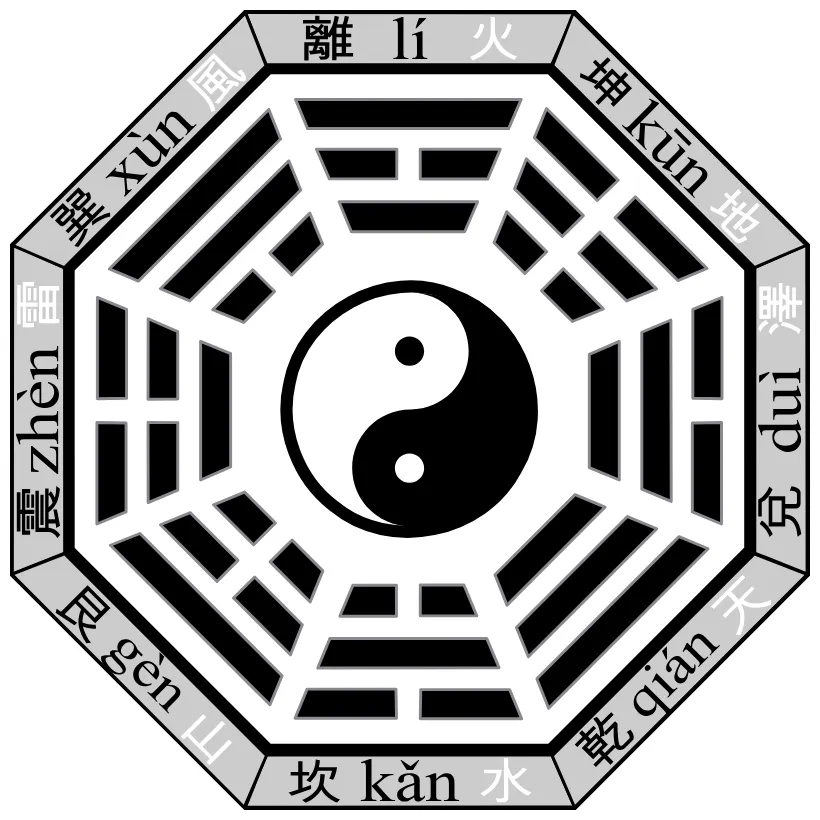
Taijiquan uses eight energies — péng (ward off, 掤), lǚ (roll back, 履), jǐ (press, 擠), àn (push, 按), cǎi (pull down, 採), liè (split, 挒), zhǒu (elbow, 肘), and kào (shoulder bump, 靠) — to match Bagua’s idea of four directions and four corners. It uses forward, backward, left, right, and central equilibrium to match five-element theory. Combined, these make up the thirteen fundamental postures.
When you practise Taiji you need to calm your thinking and use intention to guide movement, so that breath and movement combine — mind, breath, and body in harmony.
Movement should be soft, smooth, continuous, centred, and upright. The whole should be harmonised so that it is natural; at the same time the breath needs to be smooth, stable, deep, soft, and light.
Taiji uses circles in a sophisticated way. The circles are smooth and alive, and originate from the waist, so that the upper and lower body act as one. The outside looks soft, but the inside has power. When you use techniques, hard and soft support each other. Issuing power (fājìn, 發勁) must concentrate the entire body’s force.
The function of push-hands practice is to develop and refine skill in application. Use stillness to control the opponent’s movement. Avoid solid and strike empty. Borrow their power, combine it with your own, and send it back. The entire body, mind, and hands must be sensitive to the strength, direction, and origin of the opponent’s force — follow their movement in time and respond appropriately.
How we train at The Moral Dragon
Monday classes in Bath focus on Gao-style Baguazhang within the Yizong syllabus. Ollie is not actively teaching Chen Panling Taijiquan at present. Hebei Xingyiquan is available by booking — if you are interested in dedicated Xingyi lessons in Bath, please get in touch.
Whether you are new to martial arts or bringing experience from another system, the requirement is the same: patience, consistency, and a willingness to work.
View class times and details → · Enquire about joining → · Gao-style Baguazhang → · Hebei Xingyiquan →